
Why Food Prices Are Rising Around the World in 2026 and What You Need to Know
The biggest challenge of the average man with the economy is the rising of food prices in 2026. A family man with an average income spent most of his money to survive hunger amidst the high rate of food prices globally. Today, if you go to the market, malls, shops, or supermarkets, the rate at which food prices are rising is so alarming. The masses complain about this a lot.
What Is Actually Happening to Food Prices Right Now
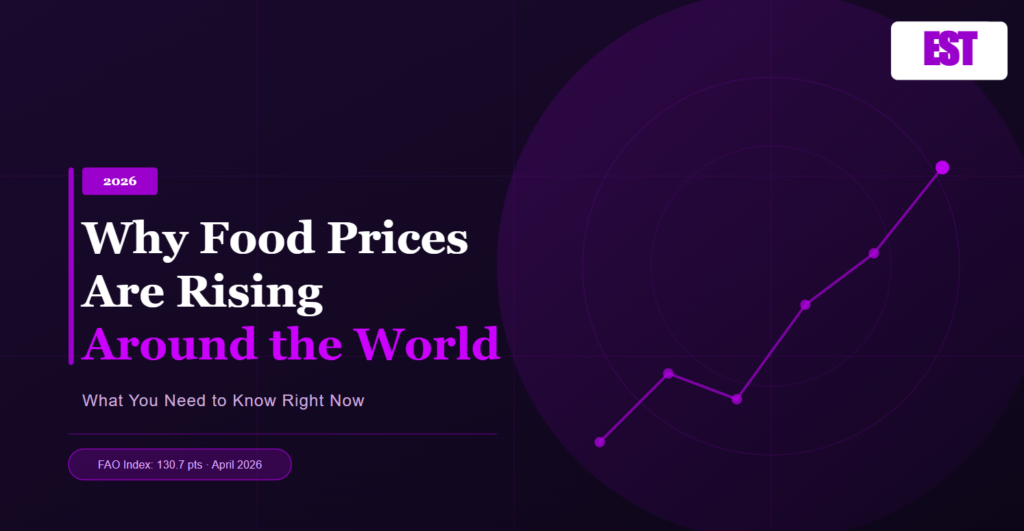
According to statistics from The Food and Agricultural Organization (FAO), food price rose from 1.6% to 130.7 points in April 2026. This is the biggest record of food price spikes taken since February 2023.
According to the Consumer Price Index (CPI) of food, there are predictions of increase in the price for all foods by 2.9%, restaurant food by 3.6%, and grocery store by 2.4%
Which Foods Are So Expensive
So far, there are increase in the price of agricultural produce and processed foods. This include beef which was 12.1% higher in March 2026 compared to March 2025. Even at that, there are prediction that it’s going to still increase by 6.3% later in 2026. Not just that, there are also predictions that sugar and sweets is going to increase by 8.1%, while beverages will increase by 5.2%
Which Foods Are The Cheapest
Amongst the categories of food that we have, egg is the cheapest with the prediction of a falling price by 27.4% in 2026. There is also significant drop in the price of tomatoes and potatoes.
Why Are Food Prices Increasing in 2026
There are diverse reasons for food prices rising so fast. These includes the war in Iran, climate change destroying farmer’s effort, fertilizer shortages, inadequate supply of revenue to farmer to get quality equipment needed for easy farming, government policy, and high cost of labor and transport.
The War in Iran and What It Is Doing to Fuel and Energy Costs
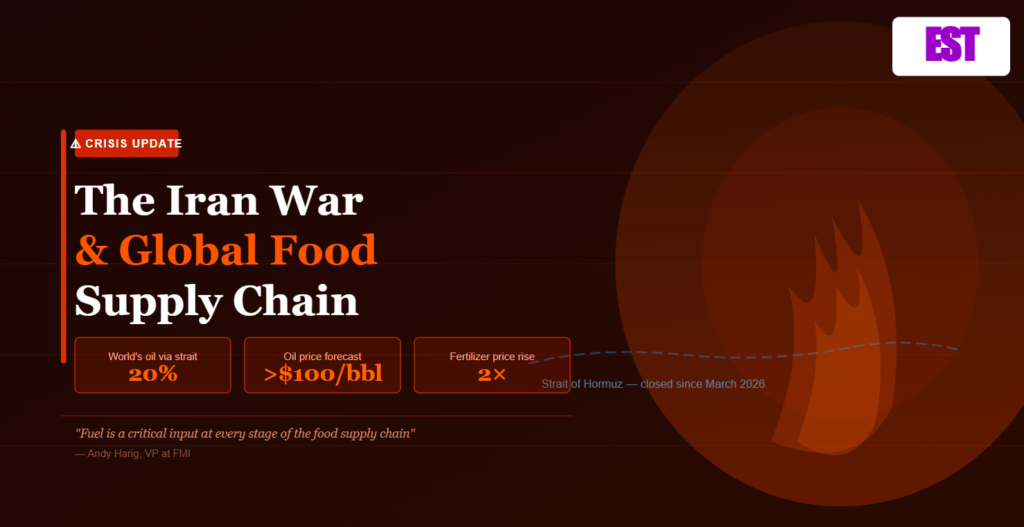
As a result of the Iran War, the strait of Hormuz which link the Persian Gulf to the Gulf of Oman and the open ocean serving as the route through which 20% of the world’s oil and gas is being transported has been closed since March 2026. The closure of this waterway led to the increase in fuel prices.
UK Foreign Secretary Yvette Cooper warned that “the world is sleepwalking into a global food crisis,” saying the world “cannot risk tens of millions of people going hungry because one country has hijacked an international shipping lane.”
Food prices will continually to go up because the closure of this waterway has stopped distribution of fertilizer from Gulf countries and thereby impacting the US food chain negatively.
Andy Harig, VP at Financial Market Infrastructure (FMI) said “Fuel is a critical input at every stage of the food supply chain, from powering farm equipment to processing, packaging and transporting products to store shelves,”
Fertilizer prices have been doubled to US agricultural producer and there have been a shortage in the supply of fertilizer to this region.
Climate and Weather Change
The factor of climate and weather change also triggers food prices spike. Places like Australia has a very low rainfall and there is drought in the US. The wheat in Europe is being affected by the frost damage. These factors truncate the effort of the agricultural producer most times.
Which Countries Suffer Food Crisis Most
The countries hit hardest is Africa then Asia, Middle East, and the West. There are 318 million people globally suffering extreme food price in 2026. If the crisis in the Middle East doesn’t end, the World Food Program (WFP) estimated that almost 45 million people will suffer more of food price spike by mid-year and oil prices will remain above $100 per barrel.
Africa
We now have records of over 87 million people facing hunger in East and Southern Africa, and there’s prediction that by mid-year, about 52 million will suffer hunger crisis in West and Central Africa.
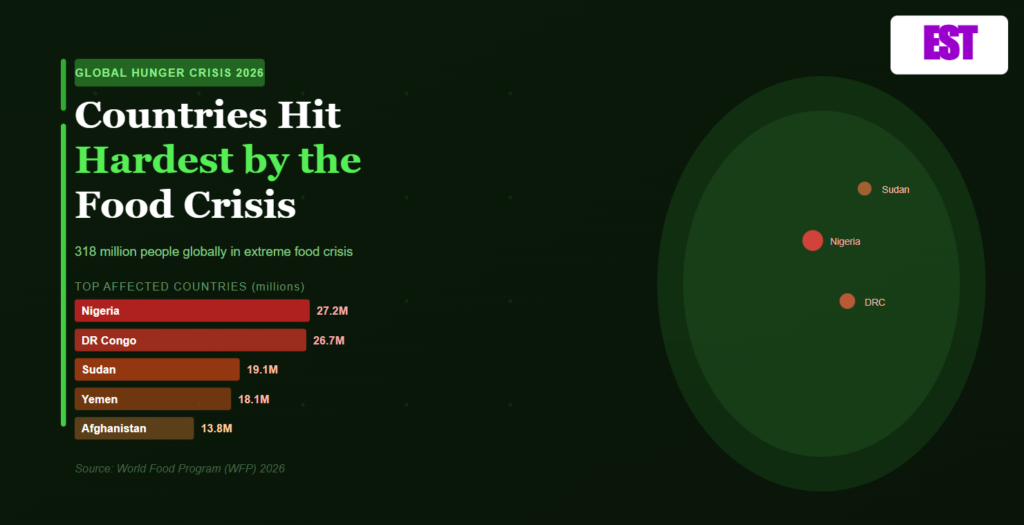
Statistically, the top country in Africa suffering food crisis is Nigeria with the count of 27.2 million people, followed by the Democratic Republic of Congo with 26.7 million people, Sudan with 19.1 million people, Yemen with 18.1 million people, and Afghanistan with 13.8 million people.
Asia
According to the World Food Program (WFP), there is possibility of over 9.1 million people to suffer hunger crisis across 10 Asian countries. In Myanmar, there are long queues for petrol as farmers strive so hard to plant due to inadequate access to imported fertilizer.
What You Can Do to Manage Rising Food Costs
There are things you can do to manage the rising food costs. Five major ways to manage this crisis include:
1. Engage in a smart grocery shopping that actually saves money.
Some people just buy things anyhow without proper consultation on whether it is right or not. If you want to scale this food price spike, you must ensure you stay curious and educated to buy the right groceries.
2. Get Foodstuffs, not eating in restaurants.
Restaurant food are very much expensive compared to getting the foodstuffs yourself to cook. The restaurant is into the business of generating revenue not to just cook for you. So, you must make sure that eating at home is prioritized.
3. Live below your means.
Sometimes the environment has a way of pressuring you to always prove a point to the people. The best person to please first is yourself, not trying to fit in to people’s expectation. Make sure that your spending on feeding is never to prove a point that you’re wealthy to anybody.
4. Don’t take junks to replace of food
I understand we are in a generation where people eat junks more than good food. Junks are not food. You must make sure that you spend less on junks and get your house restocked with foodstuffs for the sake of your health. Taking junk gradually causes damage to your health and the funny part is that junk is much more expensive than getting foodstuffs
5. Engage in Mini-Farming
You can get your hands in mini-farming in your house. Since it is for personal consumption, it’s going to avoid the cost of getting expensive agricultural produce in the market. It might not just be in farming, but as well in rearing livestock for sale and consumption. It helps to generate more income and manage the food crisis.

Final Thoughts: Why Food Prices Are Rising Around the World in 2026 and What You Need to Know
Food prices will continue to rise in 2026 due to some factors explained above. The human race is meant to manage the influence, and that’s why it is expedient that we leave the complaint desk and get back to the reality of fighting it. If you keep complaining, there won’t be a solution, and the masses will continue to suffer for it. The government you are complaining about is actually not suffering. Their families are feeding well without feeling the pains of this food crisis in 2026. Your complaint is valid, but it will not bring a solution.







1 thought on “Why Food Prices Are Rising Around the World in 2026 and What You Need to Know”
Pingback: Iran Is Recruiting teenage children into the military in 2026 - Business Entertainment News
Comments are closed.